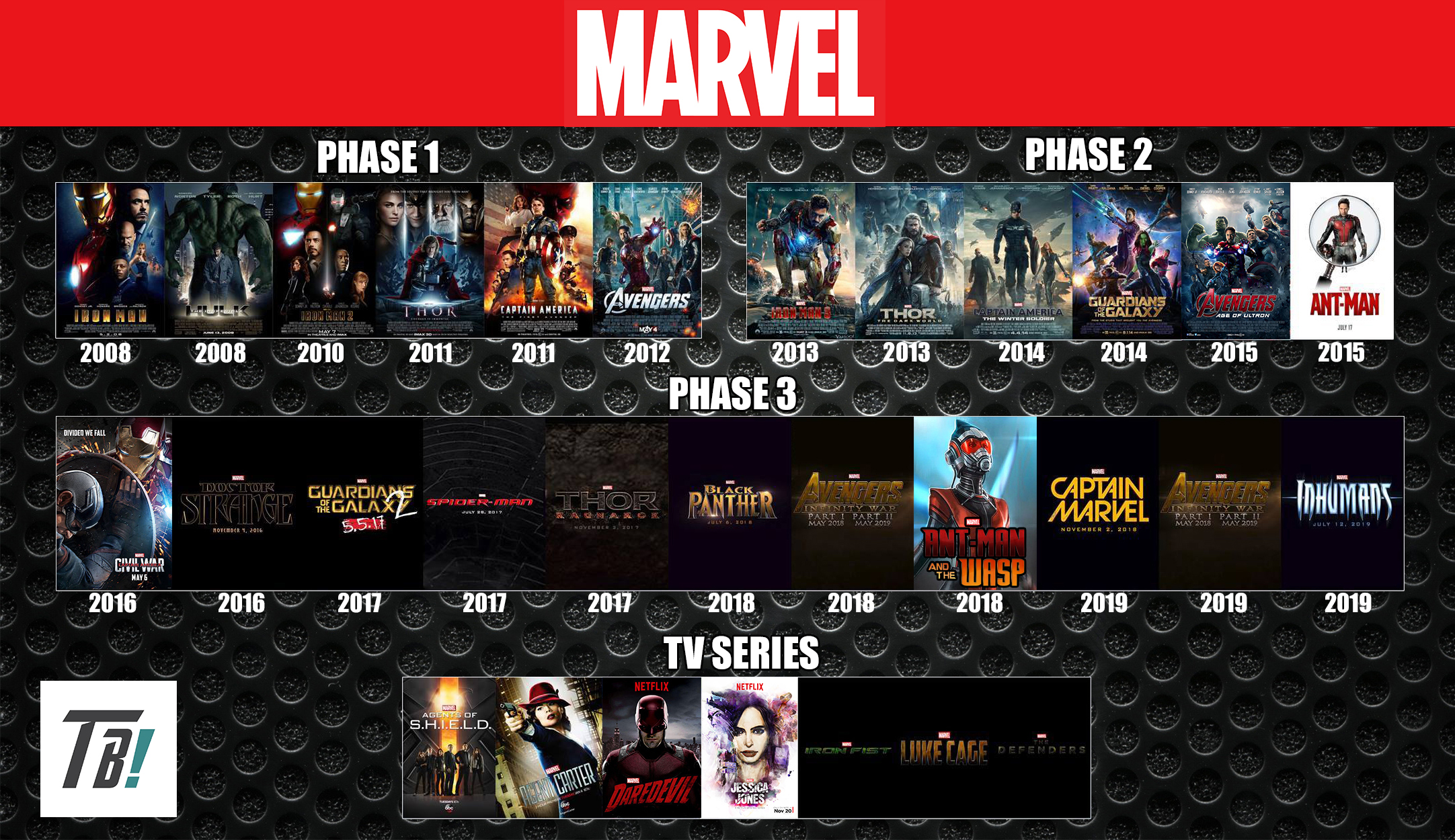
The Marvel Cinematic Universe is the most ambitious cinematic experiment in Hollywood history: a shared universe of interconnected films and TV series, built arc by arc over more than 15 years. What began with Iron Man in 2008 has become the most financially successful franchise of all time, with a worldwide cumulative gross exceeding $30 billion.
The Sagas
The MCU is structured into Sagas, each with a narrative arc spanning multiple films and culminating in a crossover event. The Infinity Saga (Phases 1–3), concluded with Avengers: Endgame in 2019, represented over 11 years of carefully built narrative, with 23 films culminating in one of the most anticipated finales in cinema history. The Multiverse Saga (Phases 4–6) introduced the concept of parallel realities, dramatically expanding the narrative possibilities.
Why the MCU Worked
The key to the MCU’s success has been narrative consistency combined with genre diversity. Each film works as a standalone story but contributes to a larger arc. Iron Man is a superhero film with the soul of a comedy. Captain America: The Winter Soldier is a political thriller. Thor: Ragnarok is an action comedy. Guardians of the Galaxy is science fiction with the heart of an 1980s film. This variety kept audiences perpetually curious about what the next title would bring.
Recommended Viewing Order
For those approaching the MCU for the first time, two valid approaches: release order (the way audiences originally experienced the story, with all the surprises intact) or internal chronological order (following the narrative timeline of the Marvel world, useful for rewatches). For a first viewing, release order remains the recommendation — each film is designed in relation to what the audience did or didn’t know up to that point.