
Rogue1.it : Open Source, AI, DevOps and Open Technologies for the Web
Welcome to Rogue1, my digital lab dedicated to open source, artificial intelligence and open technologies. Here I explore the possibilities of Linux, open source tools and generative AI applied to software development, gaming and IT automation.
From open source 3D music visualizers like Tempest to games developed entirely with Claude AI, through practical guides on Linux gaming, DevOps automation and self-hosting: every project stems from the belief that technology should be accessible, transparent and free. For a web without borders.
>> For a Web Without Borders <<
“This is for Everyone” – Tim Berners-Lee
- 1
- 2
Featured Open Source Projects
🎮 AST3ROIDX
A complete arcade space shooter developed in less than one day with Claude Sonnet 4.5. Realistic physics, achievement system and advanced particles. A hands-on experiment on how AI can accelerate development from concept to playable game.
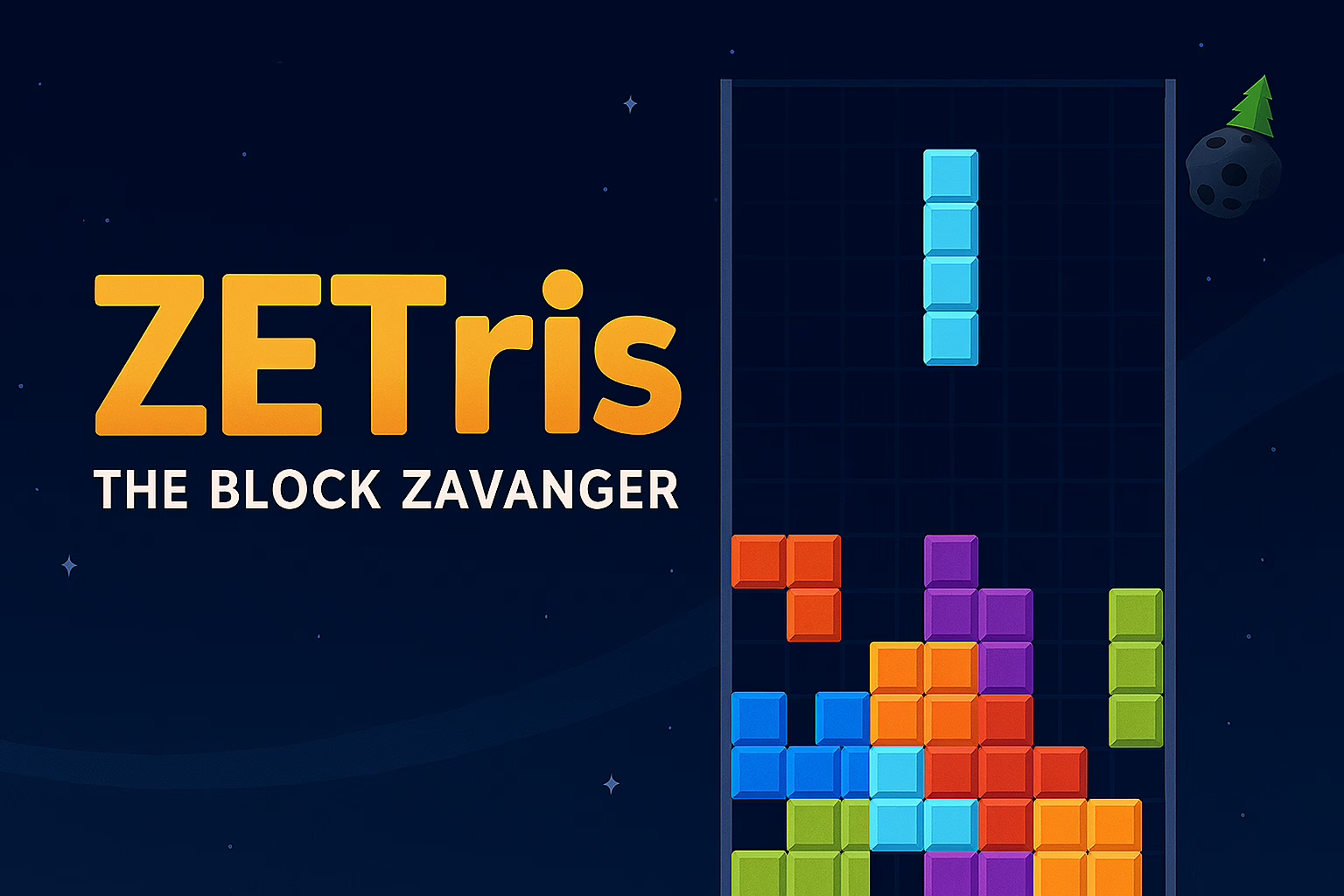
🧱 BOMBRIS
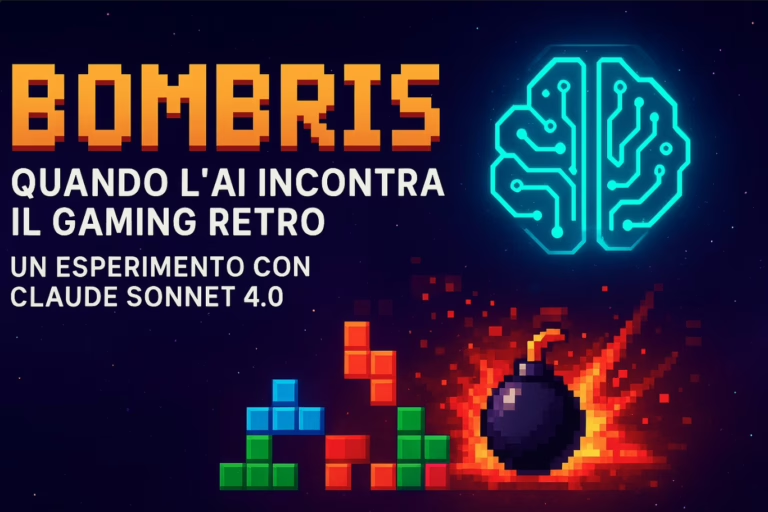
A complete puzzle game created in 48 hours using Claude Code. From zero to working game through AI pair programming. An experiment in what a developer can achieve in collaboration with the most advanced artificial intelligence.
🎧 Tempest
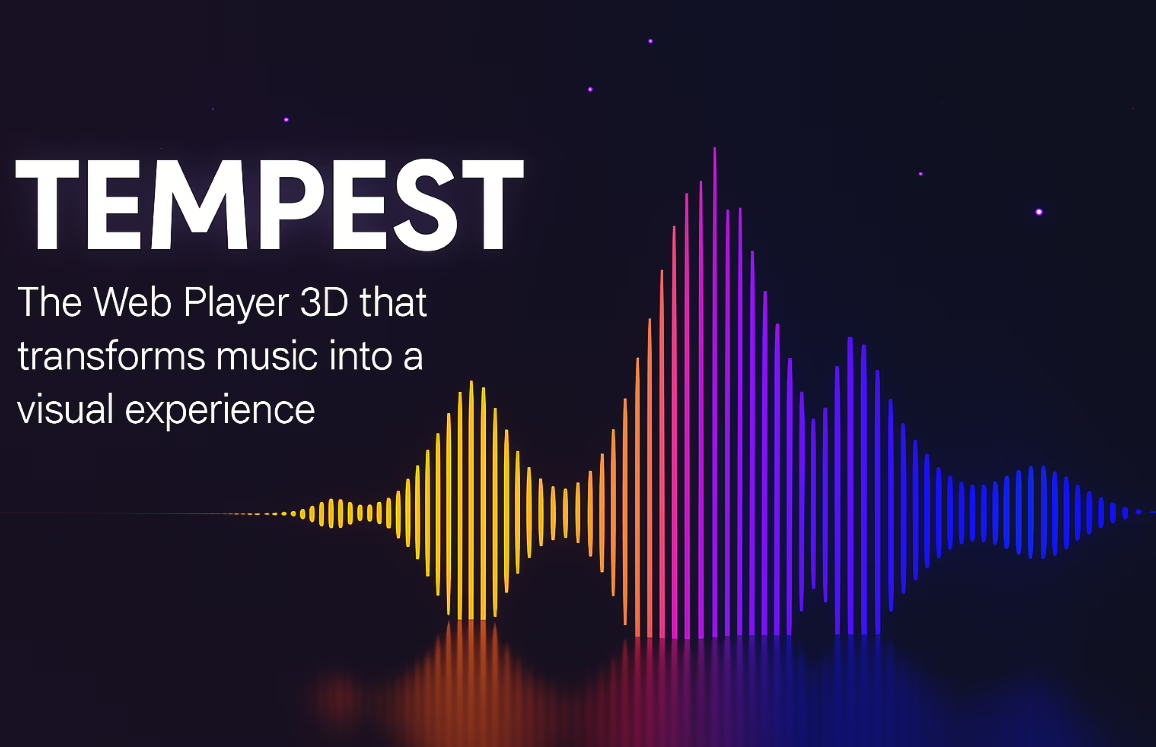
A 3D music web player that transforms audio into immersive visualisations. Built with Three.js and Web Audio API, supports local files and online radio. Zero proprietary dependencies, works on any modern browser.
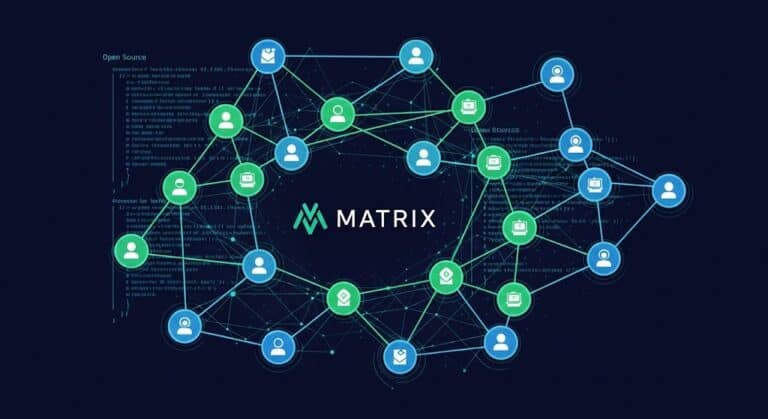
💬 Matrix Synapse
A complete guide to installing and configuring your own Matrix server for decentralised communications. Take back control of your conversations, away from centralised platforms that collect your data.
Open Technologies and Artificial Intelligence
Development with Artificial Intelligence
Practical experiments with Claude AI, Claude Code and generative AI tools. How artificial intelligence is democratising software development: from those who know how to code to those who want to learn, AI breaks down entry barriers.
- Complete game development with AI in 24-48 hours
- Effective pair programming with Claude Code
- Best practices for prompt engineering
- Analysis of AI limits and potential in coding
- Real case studies: from concept to finished product
Linux and Open Systems
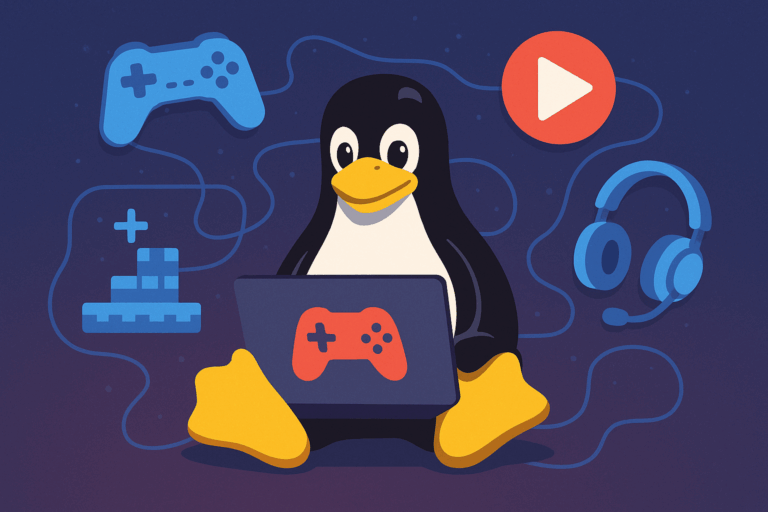
Linux is not just an operating system: it is a philosophy. Practical guides for gaming, server management, automation and productivity on completely open ecosystems. From Proton/Wine configuration to self-hosting critical services.
- Gaming on Linux: Proton, Lutris, Wine in detail
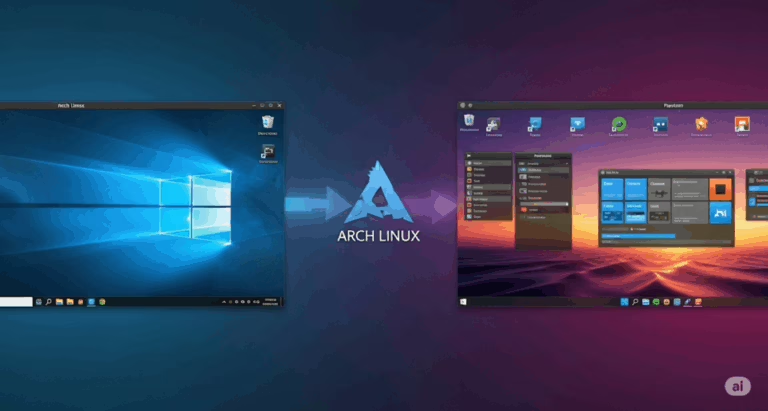
- Transition from Windows to Linux for developers
- Docker and modern containerisation
- Ansible for IT infrastructure automation
- Open source alternatives to proprietary software
Open Source Web Technologies
Web development with open technologies: Three.js, WebGL, Web Audio API, Progressive Web Apps. Projects that work on every platform without vendor lock-in, without telemetry, without compromising user privacy.
- Interactive 3D applications in the browser
- Real-time audio and graphic visualisers
- PWA and offline-first applications
- WebAssembly for native performance
- Modern web APIs without heavy frameworks
Self-Hosting and Privacy
Take back control of your data with self-hosted solutions. Guides for installing and managing services like Matrix, mail servers, cloud storage and decentralised chats. Privacy by design, zero dependence on big tech.
- Matrix Synapse for decentralised messaging
- Self-hosted alternatives to cloud services
- Docker compose for complete stacks
- Personal data backup and security
- Open protocols vs closed platforms
Open Gaming and Retrogaming
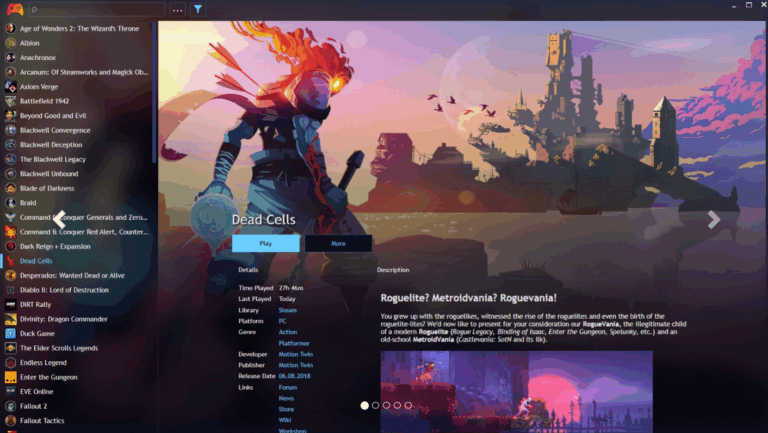
Open source games, emulation, digital preservation and accessible gaming. From classic arcade to modern indie games, exploring how gaming can be free, open and community-driven. Plus a multi-platform launcher to organise your library.
- Browser-based arcade games without installation
- Retrogaming and cultural preservation
- Open source game engines for developers
- Universal launcher for Steam, Epic, GOG
- Cross-platform gaming without lock-in
DevOps & IT Automation
Tools and workflows for modern DevOps. Practical guides on Ansible, Docker, CI/CD, monitoring and complete infrastructure automation. From single servers to Kubernetes clusters, always with an open source focus.
- Ansible playbooks for server automation
- Docker and docker-compose best practices
- Monitoring and logging with open source stack
- CI/CD pipelines without vendor lock-in
- Reproducible Infrastructure as Code
For a Web Without Borders
“This is for Everyone”
— Tim Berners-Lee, inventor of the World Wide Web
Every project on Rogue1 is born from a precise vision of the technological future. A future where tools are accessible, code is transparent, data is under user control and innovation is collaborative.
Open Source First
Software must be transparent, modifiable and shareable. Open code is not just a licence: it is the foundation for sustainable innovation, digital trust and individual empowerment. Every project here is open source by design.
Democratic AI
Artificial intelligence must be accessible to everyone, not just large corporations. Open AI tools for developers, creatives and anyone who wants to experiment. AI as an amplifier of human capabilities, not as a proprietary black box.
Free Technologies
Zero vendor lock-in, zero dependence on closed ecosystems. Open standards, real interoperability, full control over your own data. Linux, decentralised protocols, self-hosting: technological freedom is possible and achievable.
Shared Knowledge
Every project is an opportunity to learn and teach. Detailed tutorials, commented source code, transparent processes. Knowledge is not private property: it is a common good that grows when shared.
Privacy by Design
Your data is yours. Full stop. No tracking, no hidden telemetry, no profiling. Self-hosted and decentralised solutions that put the user at the centre, not the platforms.
Continuous Experimentation
Technology evolves quickly. The only way to keep up is to experiment, fail, learn, iterate. Every project here is an experiment, a playground to test new ideas without commercial constraints.
Do you also believe in an open, free and accessible web? Join the community, use the projects, contribute with ideas and feedback.
Start Exploring
All projects are open source, documented and ready to use. Download, modify, share, improve. The code belongs to everyone.